

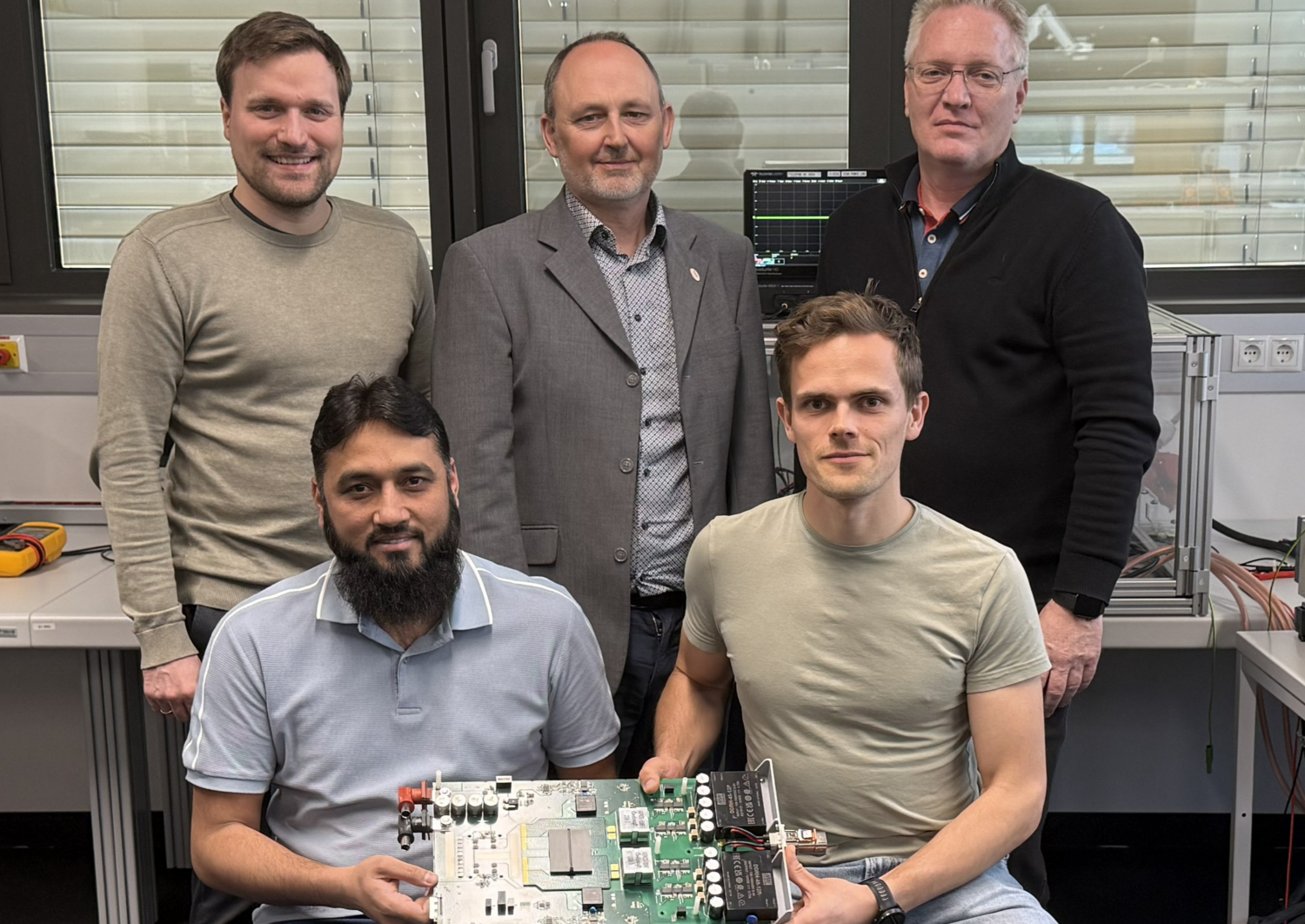
After a two-year run, the REDSEL research project was successfully completed. The project focused on developing a redundant high-voltage/low-voltage electrical system architecture that enables a flexible and fail-safe power supply in electric vehicles. This approach makes it possible to eliminate the need for the traditional low-voltage battery in electric cars in the long term.
“The technologies we’ve developed lay the groundwork for lighter and more robust vehicle electrical systems, thereby making a significant contribution to the advancement of electric mobility—all the way to future autonomous applications,” explains Albert Frank, project leader at Silicon Austria Labs.
Technological innovations for robust vehicle electrical systems
At the heart of REDSEL is a redundant system architecture with active load balancing between two high-voltage batteries, which ensures even load distribution and significantly increases operational reliability. This was complemented by the development of a power electronics converter with multiple inputs, which—thanks to an innovative magnetic integration concept—could be designed to be particularly compact, efficient, and space-saving.
Technologically, the project relied on newest semiconductor solutions: On the high-voltage side, 750V silicon carbide MOSFETs (CoolSiC™) were used, while on the low-voltage side, 30V OptiMOS™-7 devices were employed for the first time, offering significant efficiency advantages over previous 40-V solutions. Improved electrical system specifications in modern electric vehicles enabled the safe use of these early development prototypes.
In addition, a new safety architecture for switching and shutdown functions has been developed, replacing mechanical relays with semiconductor switches. This increases reliability, reduces the required installation space and weight, and enhances the system’s operational safety.
Strong industry-research collaboration as a key to success
“REDSEL is an excellent example of how new, innovative system solutions can emerge through collaboration between academic and industrial partners. The system demonstrator developed for the project impressively demonstrates how new vehicle electrical architecture can be implemented more safely and scalable in the future,” emphasizes Ernst Katzmaier, project leader at Infineon Technologies Austria.
ABOUT SILICON AUSTRIA LABS (SAL)
Silicon Austria Labs (SAL) is a non-university research center for electronics- and software-based systems (ESBS). SAL conducts collaborative, application-oriented research in the fields of microsystems, sensor systems, power electronics, intelligent wireless systems, and embedded systems at its locations in Graz, Villach, and Linz. The goal is to develop and implement new technologies along the value chain in collaboration with industry and academia. The owners are the Republic of Austria, the provinces of Styria, Carinthia, and Upper Austria, as well as the Association of the Electrical and Electronics Industry.
CONTACT:
DI Dr. techn. Thomas Langbauer
Team Lead Architectures & Topologies (AT)
+43 664 815 78 69
thomas.langbauer@silicon-austria.com
Isabella Preuer, BA BA MA
Head of Communications & PR
+43 664 832 97 73
press@silicon-austria.com
www.silicon-austria-labs.com/presse